
At the edge of Utah’s West Bench, something small is taking root—with big implications for the future.
Terraine, a new community shaped by the principles of localscapes and long-term water stewardship, is partnering with the Utah Department of Agriculture and Food (UDAF) and Utah Water Ways — a private/public partnership dedicated to coordinating efforts within Utah to optimize the use of the state’s water resources. Together we will bring a Pollinator Garden Walk to life as a working example of how growth and conservation can coexist in one of the driest states in the country.
Why This Program Exists
The big picture is hard to ignore. Utah’s population is projected to double by 2060, but the water supply can’t. According to the Utah Division of Water Resources, without meaningful conservation and new water strategies, the state won’t have enough water to meet future demand.
And here’s the kicker: more than 60% of the water delivered by the Jordan Valley Water Conservancy District goes toward outdoor landscaping.
That makes yards—not just reservoirs—the front line of Utah’s water future.
Utah Department of Agriculture and Food’s (UDAF) pollinator program exists to rethink that equation. Through grants and guidance, it helps communities replace high-water-use landscaping with drought-tolerant, native plants that support pollinators like bees, butterflies, and birds. Less water. More life. A smarter system all around.
Designing with Purpose
The Pollinator Walk at Terraine was designed by Cultivate and Loci, the same team behind the community’s broader landscape framework. Their approach blends ecological function with a design-forward aesthetic—proving that conservation can create beautiful, wild landscapes while at the same time bring opportunities to learn about our Utah landscape and ecosystems. .
To ensure the garden met the program’s goals, UDAF’s Liz Hamilton collaborated with Loci’s Marcus Pulsipher to refine the plant palette. The result is a curated mix of native, drought-tolerant species specifically chosen to attract and sustain pollinators.
Where the Plants Come From
This isn’t an off-the-shelf garden.
UDAF is actively growing a portion of the plants—specifically those that are harder to source through traditional nurseries. The remaining selections are being sourced from private growers, creating a hybrid model that supports both ecological goals and the local plant economy.
How It Comes to Life
Implementation is where the community steps in.
On October 24th, Terraine will host a volunteer planting day, with multiple two-hour shifts led by LMS Landscaping, Utah Water Ways, and UDAF. It’s an open invitation to get your hands dirty, learn about water-wise planting, and be part of something that extends beyond a single neighborhood.
This isn’t just about installing a garden. It’s about sharing knowledge—how to design, plant, and maintain a Utah landscape that uses less water and gives more back.
A Small Garden with a Big Role
The Pollinator Walk at Terraine is a signal of what’s possible. A living example of how growth and conservation can work together. That native plants aren’t a compromise—they’re a beautiful upgrade. And that communities can play an active role in solving challenges that affect the entire state.
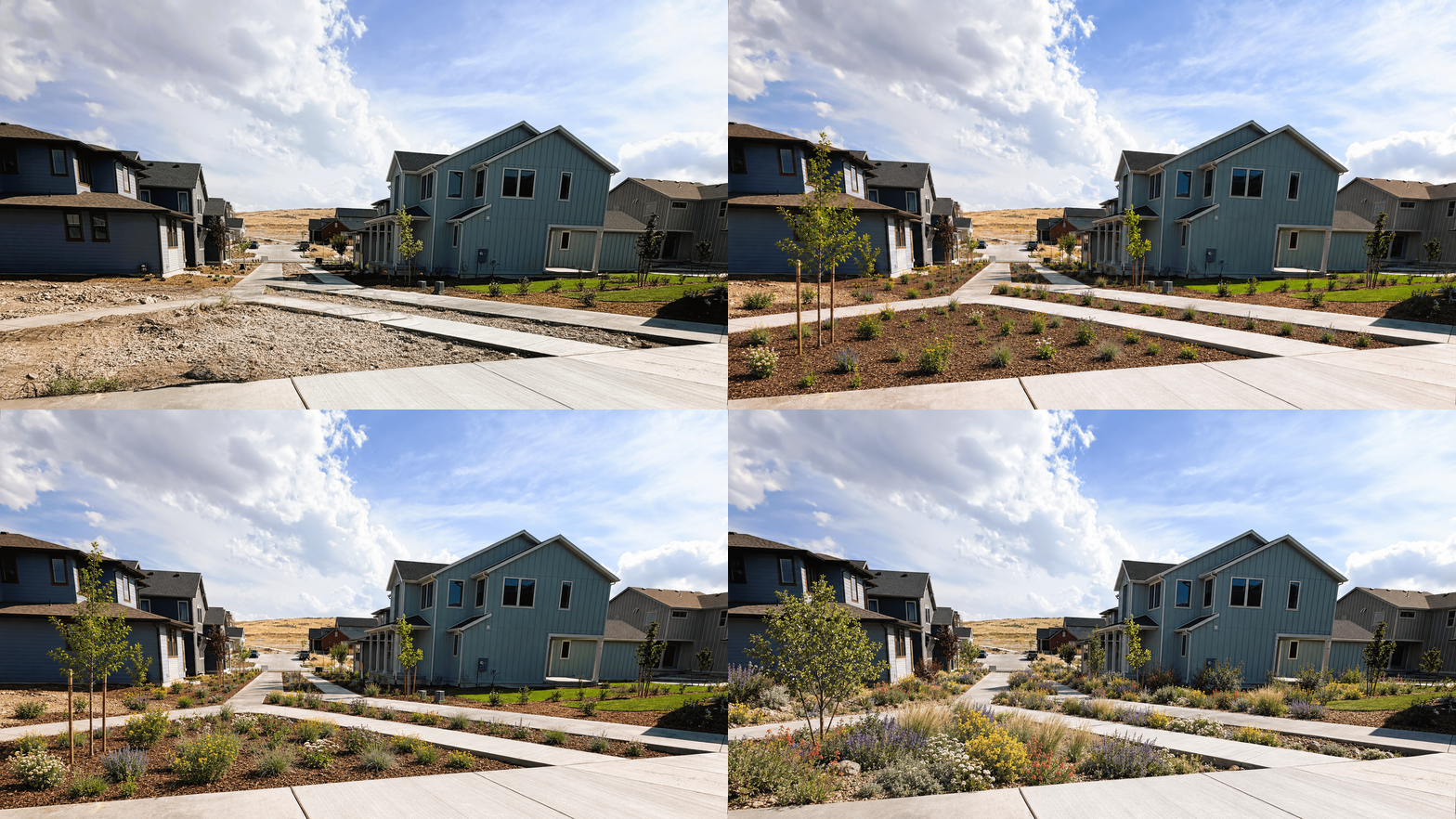
*Rendered image above is based on the actual planting plan, but is for illustrative purposes only. Please note, we will not be planting in the front yards of the homes.*